
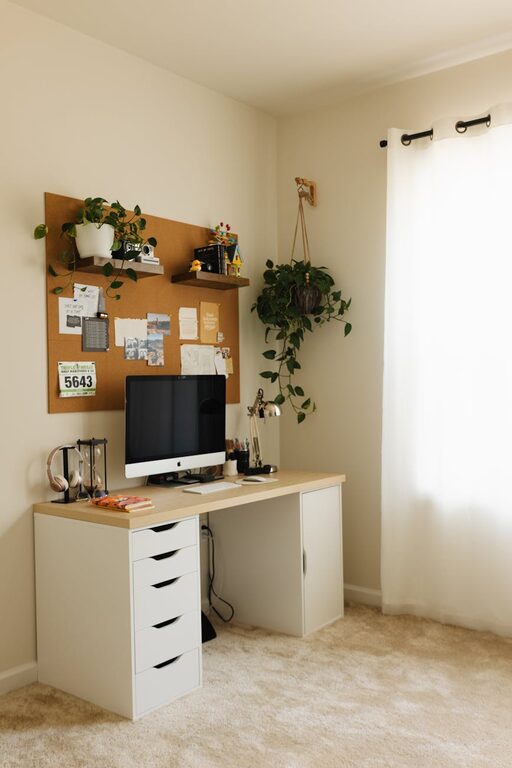
Setting up a home office that promotes productivity can make all the difference to your workday. Whether you’re working remotely full-time or need a designated space to manage household tasks, creating an environment that supports focus and motivation is key. Here are practical tips to help you design a home office space that works for you.
1. Choose the Right Location
Selecting the best spot for your home office is the foundation of a productive workspace.
– Quiet and Private: Pick a space away from the busiest parts of your home to reduce distractions.
– Natural Light: Aim for a room or corner with plenty of daylight. Natural light helps reduce eye strain and elevates mood.
– Ventilation: Ensure good airflow for comfort throughout the day.
– Space to Move: Make sure there’s enough room to move around and organise your essentials without feeling cramped.
2. Invest in Quality Furniture
Comfort and ergonomics matter, especially if you spend several hours at your desk.
– Desk: Choose a sturdy desk that fits your equipment and provides space to work comfortably.
– Chair: An ergonomic office chair with adjustable height and good lumbar support prevents back pain and encourages good posture.
– Additional Furniture: Shelving units, filing cabinets, or bookcases can help keep paperwork and supplies organised.
3. Declutter and Organise
A tidy workspace fosters a clear mind and efficient working habits.
– Storage Solutions: Use drawers, baskets, or trays to keep your desk free from clutter.
– Cable Management: Use clips or cable organisers to prevent tangled cords.
– Daily Reset: Take a few minutes at the end of each day to tidy your desk and prepare for tomorrow.
4. Prioritise Good Lighting
Beyond natural light, ensure your office is well-lit to avoid eye strain.
– Desk Lamp: A focused desk lamp with adjustable brightness is helpful for tasks that require concentration.
– Ambient Lighting: Combine overhead lights with softer options to reduce harsh shadows and create a comfortable atmosphere.
– Screen Positioning: Avoid glare on your computer screen by positioning it perpendicular to windows.
5. Create a Personal and Motivating Space
Your home office should feel welcoming and inspire you to work.
– Decorate Thoughtfully: Add personal touches like artwork, plants, or photos that lift your spirits without distracting you.
– Use Calming Colours: Choose paint or accessories in colours that promote focus and calmness such as blues, greens, or neutrals.
– Incorporate Plants: Indoor plants improve air quality and create a pleasant environment.
6. Minimise Distractions
It’s easier to stay productive when interruptions are kept to a minimum.
– Set Boundaries: Communicate your working hours to family or housemates.
– Dedicated Devices: Use separate devices for work and leisure if possible.
– Noise Control: Consider noise-cancelling headphones or white noise machines if ambient sounds are disruptive.
7. Ensure Proper Technology Setup
Having the right technology in place supports smooth and efficient work.
– Reliable Internet: A strong, stable connection is essential for video calls, cloud access, and research.
– Equipment: Invest in quality monitors, keyboards, and mice to reduce physical strain.
– Backup Plans: Use battery backups or surge protectors to prevent data loss during outages.
8. Take Regular Breaks and Move
A productive workspace supports your well-being, which helps maintain focus.
– Break Reminder: Use reminders to take short breaks every hour to stretch and rest your eyes.
– Standing Desk Option: Consider a sit-stand desk to alternate positions throughout the day.
– Exercise Space: If possible, create space for brief physical activity to refresh your mind.
9. Personalise Your Workflow
Working in a way that suits your habits improves productivity.
– Task Management Tools: Use planners or digital tools to organise your workload.
– Set Goals: Define daily and weekly objectives to stay on track.
– Adjust as Needed: Regularly assess what works and tweak your space or routine accordingly.
—
Creating a productive home office doesn’t require a large budget, but it does need some thought and planning. By focusing on location, comfort, organisation, and your personal preferences, you can design a workspace that energises and supports you throughout the day. Remember, your home office should help make your work easier and more enjoyable – tailor it to fit your needs and watch your productivity improve.