
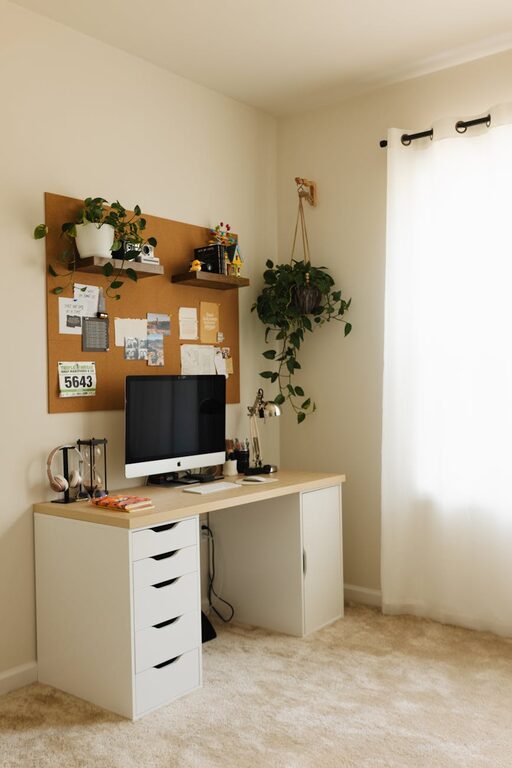
Creating a home workspace that balances comfort and functionality is essential for maintaining productivity and well-being throughout your workday. Whether you are working remotely full-time or need a spot for occasional tasks, designing an area that feels welcoming yet efficient can boost your focus and reduce stress. Here are some helpful tips to create a cosy and functional home workspace.
Choose the Right Location
Start by selecting a spot in your home that minimises distractions and offers enough space for your needs. Ideally, this should be a quiet area where you can concentrate, such as a spare room, a corner in the living room, or even a section of the bedroom if space is limited.
Consider factors like natural light, temperature, and proximity to amenities. Good natural light can improve mood and reduce eye strain, so positioning your desk near a window is beneficial. However, avoid glare on your computer screen by using curtains or blinds as needed.
Invest in a Comfortable Chair and Desk
Ergonomics play a key role in both comfort and productivity. A chair with adjustable height and lumbar support helps maintain good posture and reduces the risk of back pain. Look for one with sufficient cushioning and armrests to keep your arms relaxed.
Your desk should be large enough to accommodate your computer, accessories, and any paperwork. Adjustable desks that allow you to switch between sitting and standing can also promote better health by encouraging movement throughout the day.
Organise Your Workspace Efficiently
Keeping your workspace tidy and organised can improve focus and efficiency. Use practical storage solutions such as shelves, drawers, and desk organisers to keep office supplies within reach but out of sight.
Cable management systems and wireless devices also help reduce clutter and make your space look neater. Label storage containers if necessary to quickly find what you need without wasting time searching.
Personalise to Make It Cosy
While functionality is important, making your workspace feel cosy and personalised can enhance comfort and motivation. Add soft textiles like a cushion or a throw rug to soften the area. Introducing plants is another great way to make the space feel inviting and improve air quality.
Decorate with items that inspire you, such as artwork, photos, or inspirational quotes, but avoid overcrowding the space to maintain a calm environment.
Optimise Lighting
Proper lighting is crucial for eye comfort and alertness. In addition to natural daylight, use task lighting like a desk lamp to focus light where you need it most. Warm-toned bulbs can create a cosy atmosphere, while cooler tones are often better for maintaining alertness.
Avoid harsh overhead lighting or flickering bulbs, which can cause discomfort and headaches over time.
Manage Noise and Distractions
Depending on your home environment, noise can be a major distraction. Try using noise-cancelling headphones or playing background music or white noise to mask disruptive sounds.
If external noise is unavoidable, consider installing rugs, curtains, or soft furnishings that absorb sound. Communicate your working hours with housemates or family to minimise interruptions.
Maintain Good Air Quality and Temperature
A well-ventilated workspace helps keep you alert and comfortable. Open a window periodically to allow fresh air in, or use an air purifier if needed.
Temperature control is equally important; keep your workspace warm enough during colder months and cool during warmer seasons. A small fan, heater, or humidifier can assist in regulating the environment suitably.
Establish a Routine and Boundaries
Finally, creating routines around your workspace can support productivity and work-life balance. Set specific working hours, take regular breaks, and use your workspace primarily for work tasks to help mentally separate work from relaxation.
At the end of the day, tidying your workspace signals time to unplug and helps maintain a sense of order.
—
Designing a home workspace that is both cosy and functional requires balancing comfort, organisation, and personal touches. By choosing the right location, investing in ergonomic furniture, optimising lighting and noise levels, and maintaining routines, you can create an environment that supports your productivity and wellbeing. With these tips, your home office will be a place you look forward to spending your workday.